

Access our content for free

EQUIS.
A Mapping of Non-Binary Identities in Argentina
This material seeks to highlight the existence of non-binary people in Argentina and their rights.
Through this material, we hope to contribute to strengthening the exercise of the rights of non-binary people, by providing information and offering insights to build a more inclusive, respectful, and equitable society for all identities.
In this material, you will find information on Argentina’s regulatory and political framework, the advancement of rights that challenge the binary nature of society at a global level, the available national demographic data, and an overview of the impact of the rise of the right wing in the current context.
* The material is only available in Spanish for now.
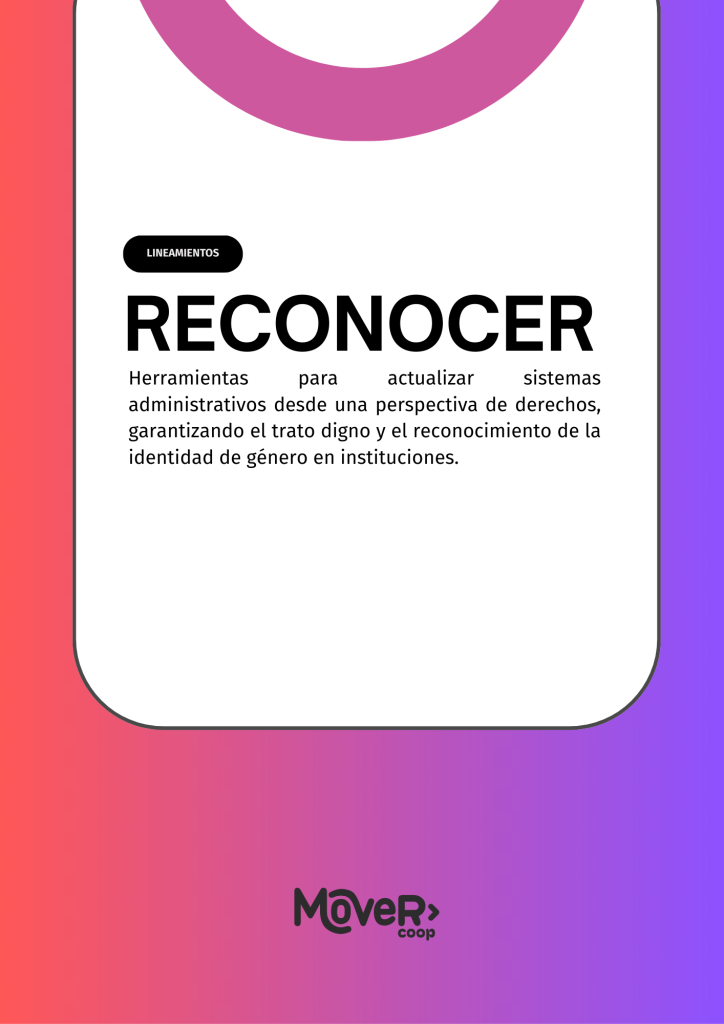
RECONOCER.
Tools for updating administrative systems from a rights-based perspective, ensuring dignified treatment and recognition of gender identity in institutions.
RECONOCER is a set of guidelines designed to support public and private institutions in updating their administrative systems from a human rights perspective. It provides a clear conceptual framework, a concise overview of the current legal and regulatory context, and practical recommendations to ensure dignified treatment and the recognition of gender identity in forms, platforms, records, and everyday procedures. Far from being merely a technical guide, this document invites institutions to rethink how administrative systems can move away from reproducing exclusion and instead become active tools for the effective exercise of rights and the construction of more just and inclusive institutions.
* The material is only available in Spanish for now
Our works
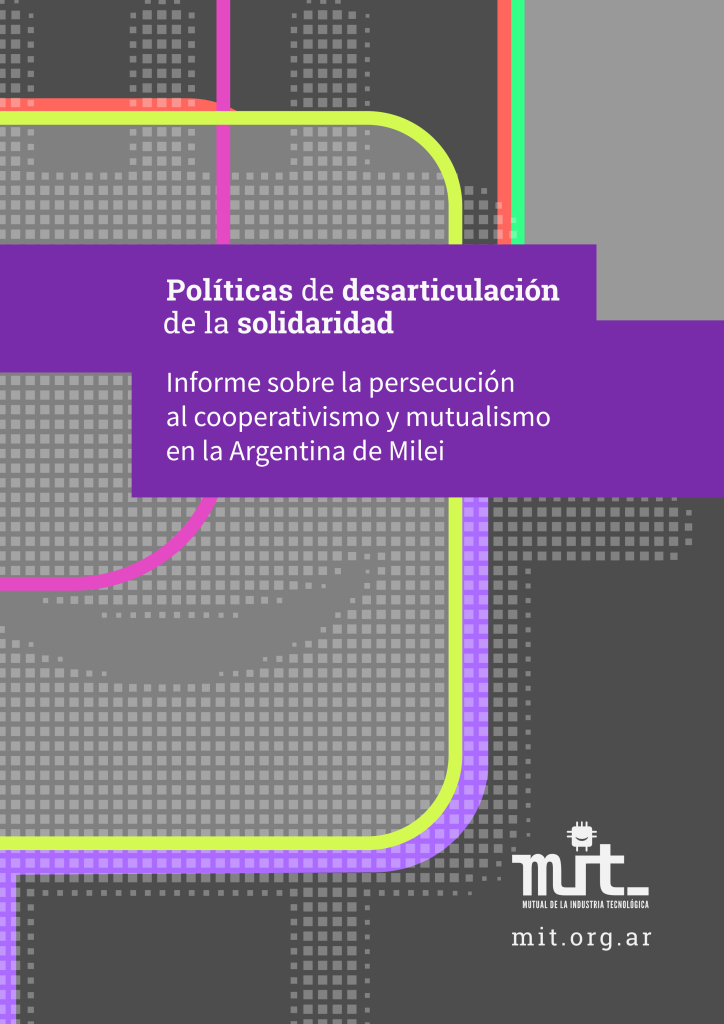
Disarticulation Policies Targeting Solidarity
Report on the Persecution of Cooperativism and Mutualism in President Milei’s Argentina
This work was carried out for the Mutual de Trabajadorxs de la Informática y el Conocimiento (MIT).
The report analyzes how, between 2024 and 2025, the government of Javier Milei deployed a set of regulatory, administrative, and discursive measures aimed at weakening cooperativism and mutualism in Argentina. Using a mixed-methods approach —including the construction of INAES databases, resolution analysis, and qualitative interviews— the document shows how state persecution translated into mass suspensions, administrative obstacles, defunding, and public stigmatization, disproportionately affecting small cooperatives. In dialogue with the sector’s history and with international experiences, the report argues that what is at stake is not only the number of active entities, but a model of the country itself: between an individualistic, extractive economy and an alternative grounded in solidarity, self-management, and community organization.
* The material is only available in Spanish for now.
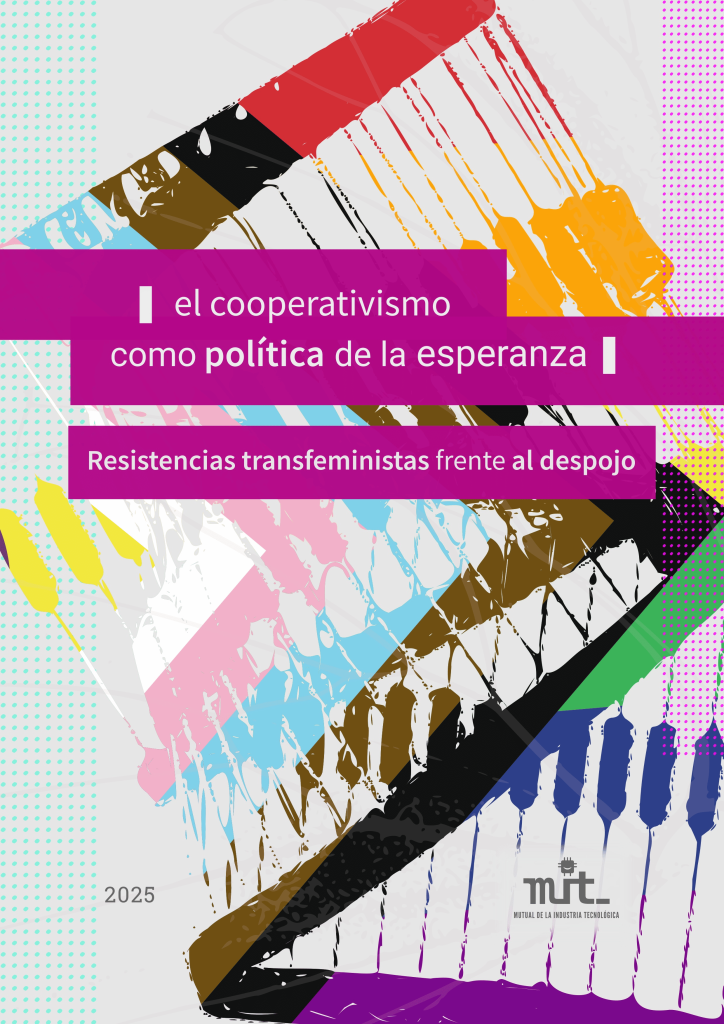
Cooperativism as a Politics of Hope
Transfeminist Resistances in the Face of Dispossession
This work was carried out with the Mutual de Trabajadorxs de la Informática y el Conocimiento (MIT).
The report analyzes how the government of Javier Milei, anti-gender hatred, and state dismantling differentially impact cooperatives and mutuals led by women and LGBTIQNB+ people. Drawing on in-depth interviews and qualitative analysis of experiences across the country, the study reconstructs how the punitive withdrawal of the state, public stigmatization, and bureaucratic disciplining affect daily life, work, and community ties. In the face of this landscape of dispossession, the report shows that cooperatives led by women and LGBTIQNB+ people remain spaces of autonomy, mutual care, and resistance, where collective work becomes a political practice to sustain life, reinvent the commons, and contest hope in times of hate.
* The material is only available in Spanish for now.

 Aportando una mirada desde la interseccionalidad, desarrollamos distintas asesorías para el mejoramiento de las organizaciones e instituciones en la construcción de respuestas tangibles a problemáticas concretas.

